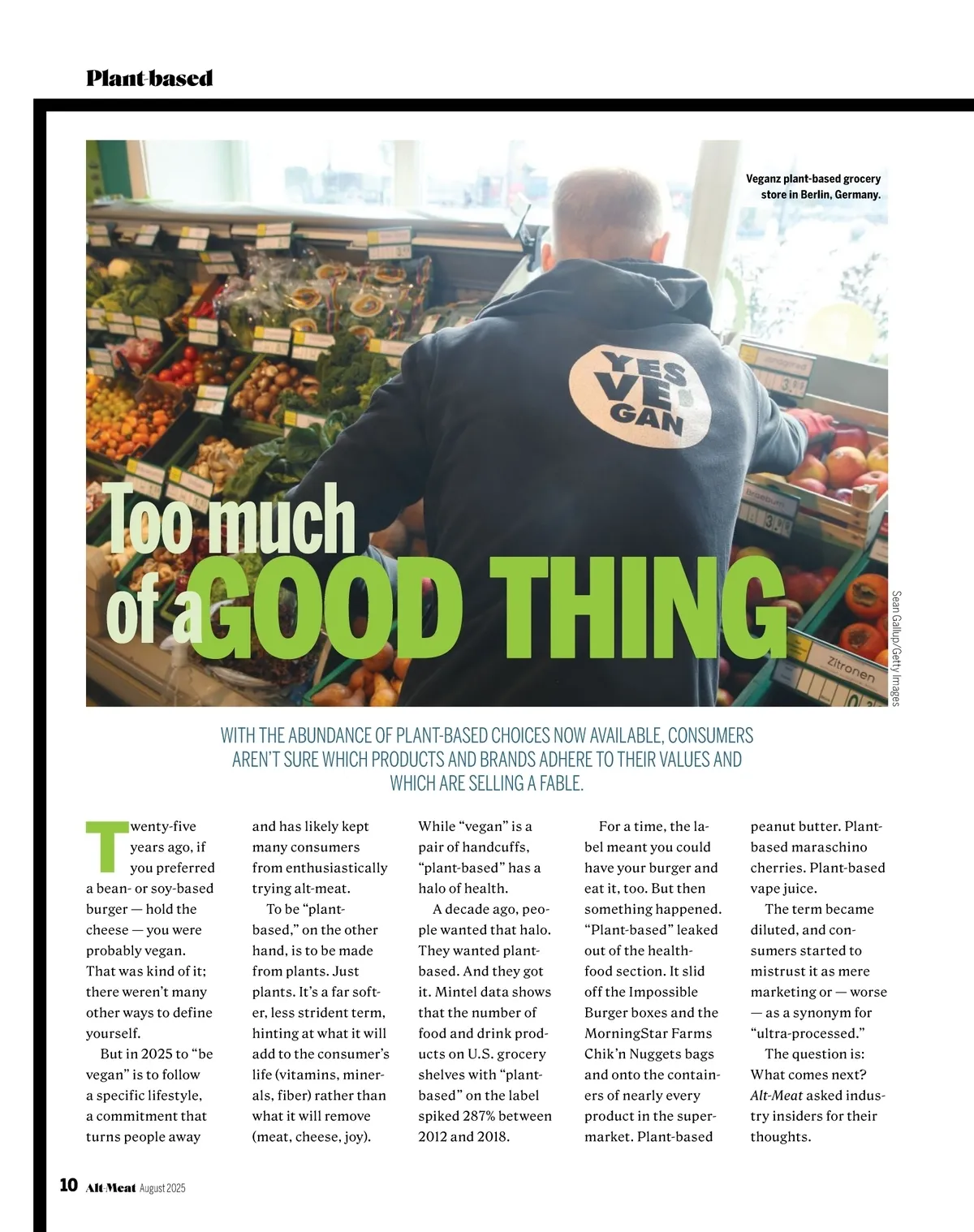
Plant-based Veganz plant-based grocery store in Berlin, Germany. Too much of a GOOD THING WITH THE ABUNDANCE OF PLANT-BASED CHOICES NOW AVAILABLE, CONSUMERS AREN’T SURE WHICH PRODUCTS AND BRANDS ADHERE TO THEIR VALUES AND WHICH ARE SELLING A FABLE. Sean Gallup/Getty Images T wenty-five years ago, if you preferred and has likely kept many consumers from enthusiastically trying alt-meat. To be “plant-based,” on the other hand, is to be made from plants. Just plants. It’s a far soft-er, less strident term, hinting at what it will add to the consumer’s life (vitamins, miner-als, fiber) rather than what it will remove (meat, cheese, joy). While “vegan” is a pair of handcuffs, “plant-based” has a halo of health. A decade ago, peo-ple wanted that halo. They wanted plant-based. And they got it. Mintel data shows that the number of food and drink prod-ucts on U.S. grocery shelves with “plant-based” on the label spiked 287% between 2012 and 2018. For a time, the la-bel meant you could have your burger and eat it, too. But then something happened. “Plant-based” leaked out of the health-food section. It slid off the Impossible Burger boxes and the MorningStar Farms Chik’n Nuggets bags and onto the contain-ers of nearly every product in the super-market. Plant-based peanut butter. Plant-based maraschino cherries. Plant-based vape juice. The term became diluted, and con-sumers started to mistrust it as mere marketing or — worse — as a synonym for “ultra-processed.” The question is: What comes next? Alt-Meat asked indus-try insiders for their thoughts. a bean-or soy-based burger — hold the cheese — you were probably vegan. That was kind of it; there weren’t many other ways to define yourself. But in 2025 to “be vegan” is to follow a specific lifestyle, a commitment that turns people away 10 Alt-Meat August 2025
Alt-Meat August 2025: Page 10