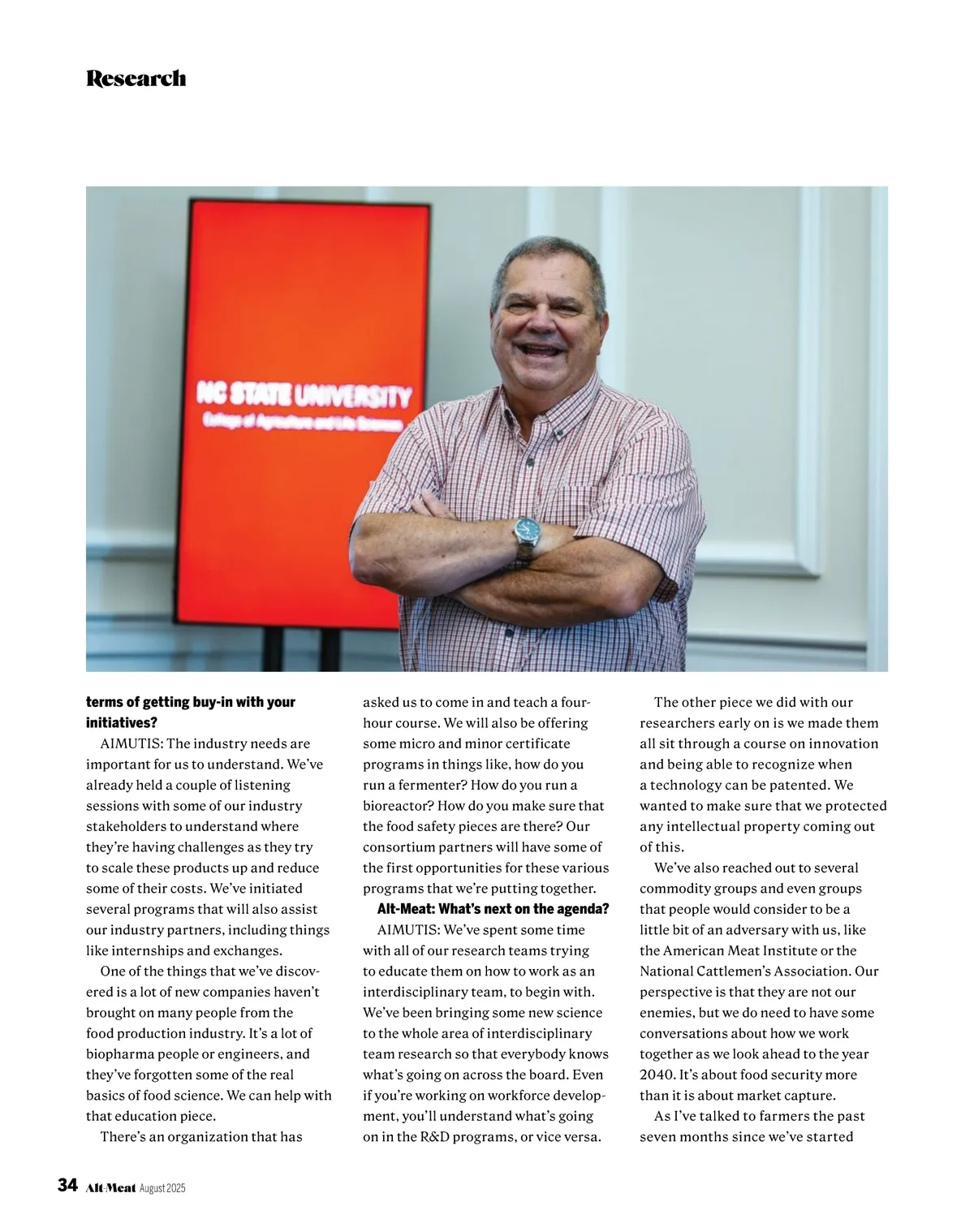
Research terms of getting buy-in with your initiatives? AIMUTIS: The industry needs are important for us to understand. We’ve already held a couple of listening sessions with some of our industry stakeholders to understand where they’re having challenges as they try to scale these products up and reduce some of their costs. We’ve initiated several programs that will also assist our industry partners, including things like internships and exchanges. One of the things that we’ve discov-ered is a lot of new companies haven’t brought on many people from the food production industry. It’s a lot of biopharma people or engineers, and they’ve forgotten some of the real basics of food science. We can help with that education piece. There’s an organization that has asked us to come in and teach a four-hour course. We will also be offering some micro and minor certificate programs in things like, how do you run a fermenter? How do you run a bioreactor? How do you make sure that the food safety pieces are there? Our consortium partners will have some of the first opportunities for these various programs that we’re putting together. The other piece we did with our researchers early on is we made them all sit through a course on innovation and being able to recognize when a technology can be patented. We wanted to make sure that we protected any intellectual property coming out of this. We’ve also reached out to several commodity groups and even groups that people would consider to be a little bit of an adversary with us, like the American Meat Institute or the National Cattlemen’s Association. Our perspective is that they are not our enemies, but we do need to have some conversations about how we work together as we look ahead to the year 2040. It’s about food security more than it is about market capture. As I’ve talked to farmers the past seven months since we’ve started Alt-Meat: What’s next on the agenda? AIMUTIS: We’ve spent some time with all of our research teams trying to educate them on how to work as an interdisciplinary team, to begin with. We’ve been bringing some new science to the whole area of interdisciplinary team research so that everybody knows what’s going on across the board. Even if you’re working on workforce develop-ment, you’ll understand what’s going on in the R&D programs, or vice versa. 34 Alt-Meat August 2025
Alt-Meat August 2025: Page 34