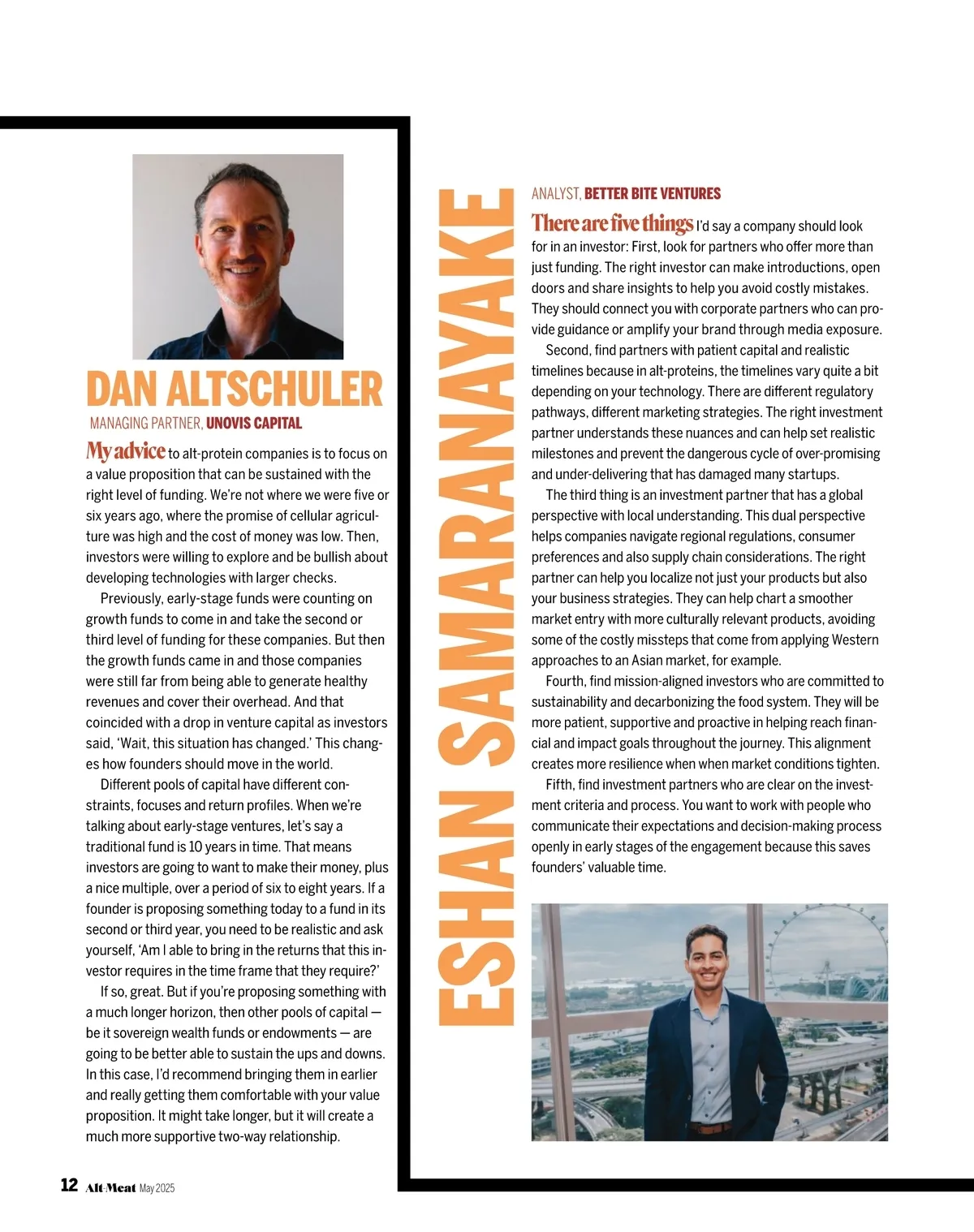
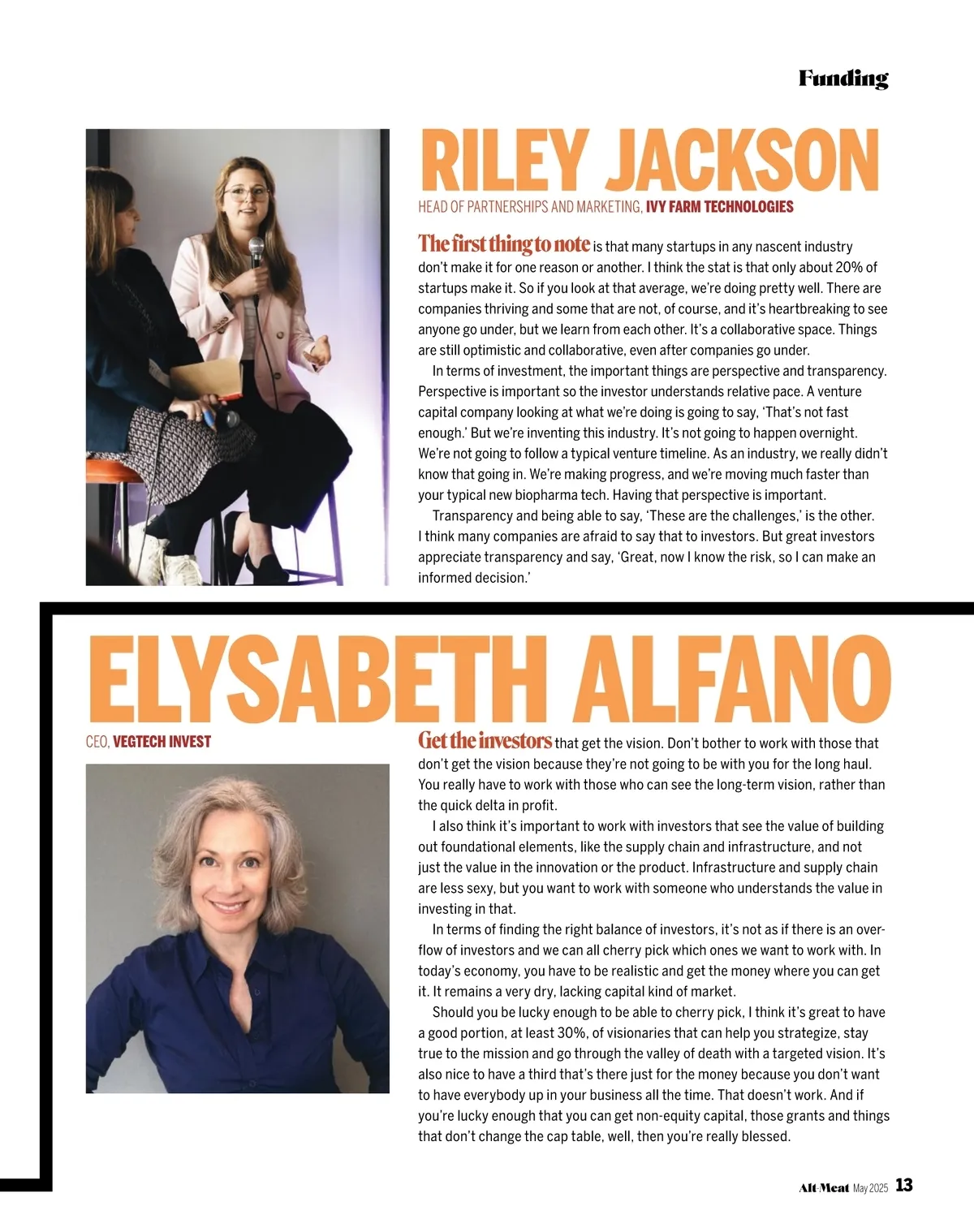
DAN ALTSCHULER a value proposition that can be sustained with the right level of funding. We’re not where we were five or six years ago, where the promise of cellular agricul-ture was high and the cost of money was low. Then, investors were willing to explore and be bullish about developing technologies with larger checks. Previously, early-stage funds were counting on growth funds to come in and take the second or third level of funding for these companies. But then the growth funds came in and those companies were still far from being able to generate healthy revenues and cover their overhead. And that coincided with a drop in venture capital as investors said, ‘Wait, this situation has changed.’ This chang-es how founders should move in the world. Different pools of capital have different con-straints, focuses and return profiles. When we’re talking about early-stage ventures, let’s say a traditional fund is 10 years in time. That means investors are going to want to make their money, plus a nice multiple, over a period of six to eight years. If a founder is proposing something today to a fund in its second or third year, you need to be realistic and ask yourself, ‘Am I able to bring in the returns that this in-vestor requires in the time frame that they require?’ If so, great. But if you’re proposing something with a much longer horizon, then other pools of capital — be it sovereign wealth funds or endowments — are going to be better able to sustain the ups and downs. In this case, I’d recommend bringing them in earlier and really getting them comfortable with your value proposition. It might take longer, but it will create a much more supportive two-way relationship. My advice to alt-protein companies is to focus on MANAGING PARTNER, UNOVIS CAPITAL 12 Alt-Meat May 2025 ESHAN SAMARANAYAKE ANALYST, BETTER BITE VENTURES There are five things I’d say a company should look for in an investor: First, look for partners who offer more than just funding. The right investor can make introductions, open doors and share insights to help you avoid costly mistakes. They should connect you with corporate partners who can pro-vide guidance or amplify your brand through media exposure. Second, find partners with patient capital and realistic timelines because in alt-proteins, the timelines vary quite a bit depending on your technology. There are different regulatory pathways, different marketing strategies. The right investment partner understands these nuances and can help set realistic milestones and prevent the dangerous cycle of over-promising and under-delivering that has damaged many startups. The third thing is an investment partner that has a global perspective with local understanding. This dual perspective helps companies navigate regional regulations, consumer preferences and also supply chain considerations. The right partner can help you localize not just your products but also your business strategies. They can help chart a smoother market entry with more culturally relevant products, avoiding some of the costly missteps that come from applying Western approaches to an Asian market, for example. Fourth, find mission-aligned investors who are committed to sustainability and decarbonizing the food system. They will be more patient, supportive and proactive in helping reach finan-cial and impact goals throughout the journey. This alignment creates more resilience when when market conditions tighten. Fifth, find investment partners who are clear on the invest-ment criteria and process. You want to work with people who communicate their expectations and decision-making process openly in early stages of the engagement because this saves founders’ valuable time.
Alt-Meat May 2025: Page 12