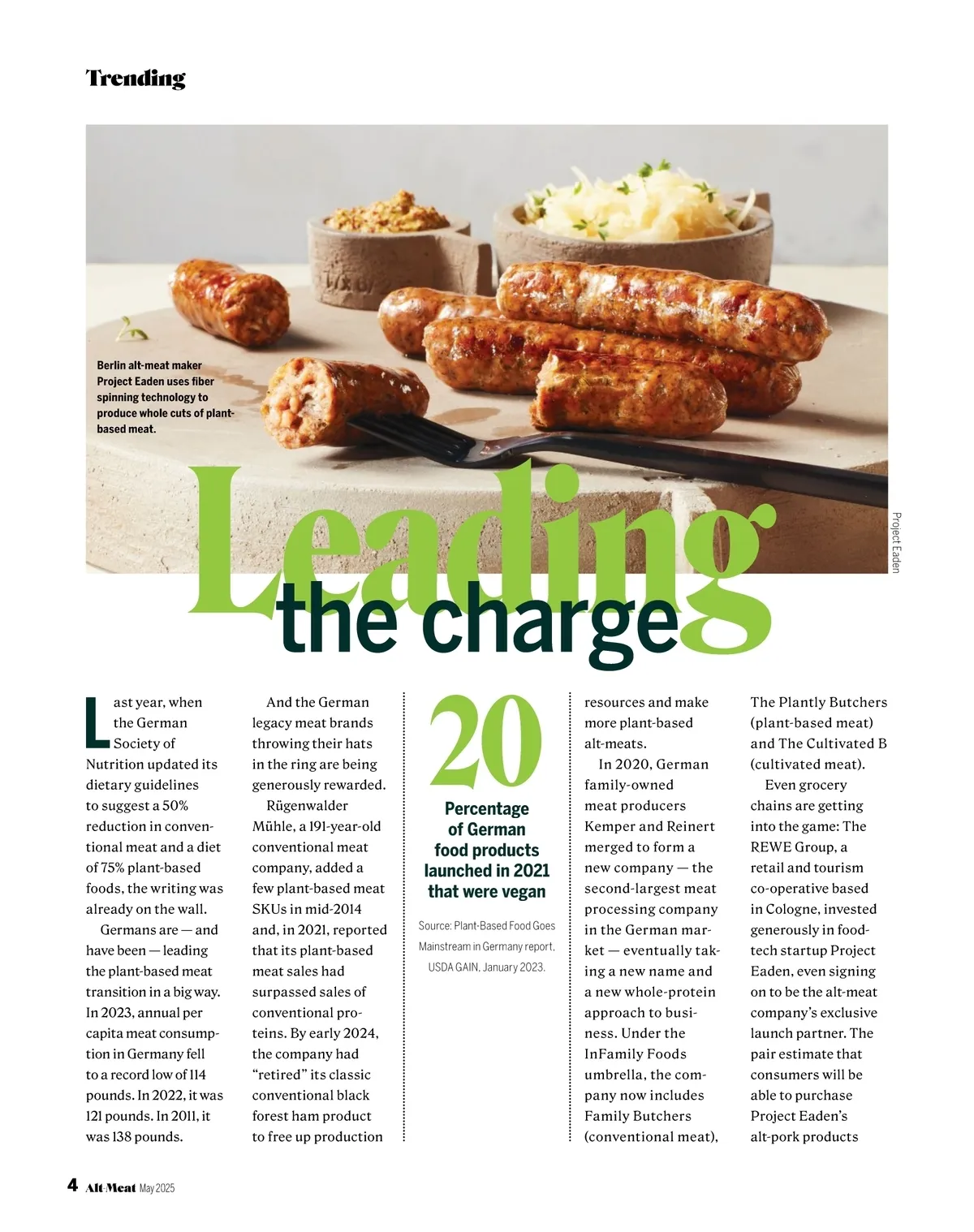
Trending Berlin alt-meat maker Project Eaden uses fiber spinning technology to produce whole cuts of plant-based meat. L ast year, when the German Society of Leading the charge And the German legacy meat brands throwing their hats in the ring are being generously rewarded. Rügenwalder Mühle, a 191-year-old conventional meat company, added a few plant-based meat SKUs in mid-2014 and, in 2021, reported that its plant-based meat sales had surpassed sales of conventional pro-teins. By early 2024, the company had “retired” its classic conventional black forest ham product to free up production Project Eaden Nutrition updated its dietary guidelines to suggest a 50% reduction in conven-tional meat and a diet of 75% plant-based foods, the writing was already on the wall. Germans are — and have been — leading the plant-based meat transition in a big way. In 2023, annual per capita meat consump-tion in Germany fell to a record low of 114 pounds. In 2022, it was 121 pounds. In 2011, it was 138 pounds. Percentage of German food products launched in 2021 that were vegan Source: Plant-Based Food Goes Mainstream in Germany report, USDA GAIN, January 2023. 20 resources and make more plant-based alt-meats. The Plantly Butchers (plant-based meat) and The Cultivated B (cultivated meat). Even grocery chains are getting into the game: The REWE Group, a retail and tourism co-operative based in Cologne, invested generously in food-tech startup Project Eaden, even signing on to be the alt-meat company’s exclusive launch partner. The pair estimate that consumers will be able to purchase Project Eaden’s alt-pork products In 2020, German family-owned meat producers Kemper and Reinert merged to form a new company — the second-largest meat processing company in the German mar-ket — eventually tak-ing a new name and a new whole-protein approach to busi-ness. Under the InFamily Foods umbrella, the com-pany now includes Family Butchers (conventional meat), 4 Alt-Meat May 2025
Alt-Meat May 2025: Page 4