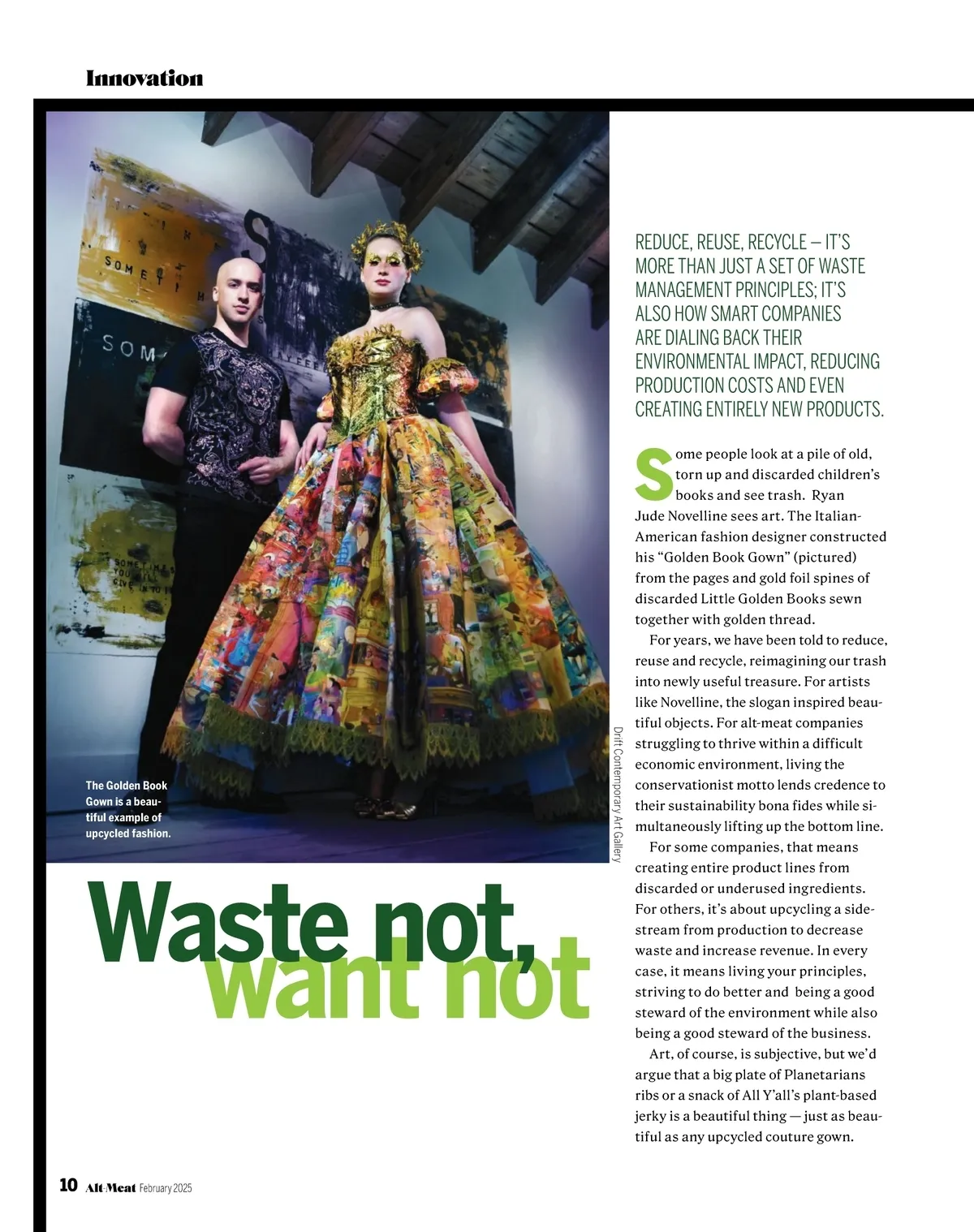
Innovation REDUCE, REUSE, RECYCLE — IT’S MORE THAN JUST A SET OF WASTE MANAGEMENT PRINCIPLES; IT’S ALSO HOW SMART COMPANIES ARE DIALING BACK THEIR ENVIRONMENTAL IMPACT, REDUCING PRODUCTION COSTS AND EVEN CREATING ENTIRELY NEW PRODUCTS. S ome people look at a pile of old, torn up and discarded children’s books and see trash. Ryan Jude Novelline sees art. The Italian-American fashion designer constructed his “Golden Book Gown” (pictured) from the pages and gold foil spines of discarded Little Golden Books sewn together with golden thread. For years, we have been told to reduce, reuse and recycle, reimagining our trash into newly useful treasure. For artists like Novelline, the slogan inspired beau-tiful objects. For alt-meat companies struggling to thrive within a difficult economic environment, living the conservationist motto lends credence to their sustainability bona fides while si-multaneously lifting up the bottom line. For some companies, that means creating entire product lines from discarded or underused ingredients. For others, it’s about upcycling a side-stream from production to decrease waste and increase revenue. In every case, it means living your principles, striving to do better and being a good steward of the environment while also being a good steward of the business. Art, of course, is subjective, but we’d argue that a big plate of Planetarians ribs or a snack of All Y’all’s plant-based jerky is a beautiful thing — just as beau-tiful as any upcycled couture gown. Drift Contemporary Art Gallery The Golden Book Gown is a beau-tiful example of upcycled fashion. Waste not, want not 10 Alt-Meat February 2025
Alt-Meat February 2025: Page 10