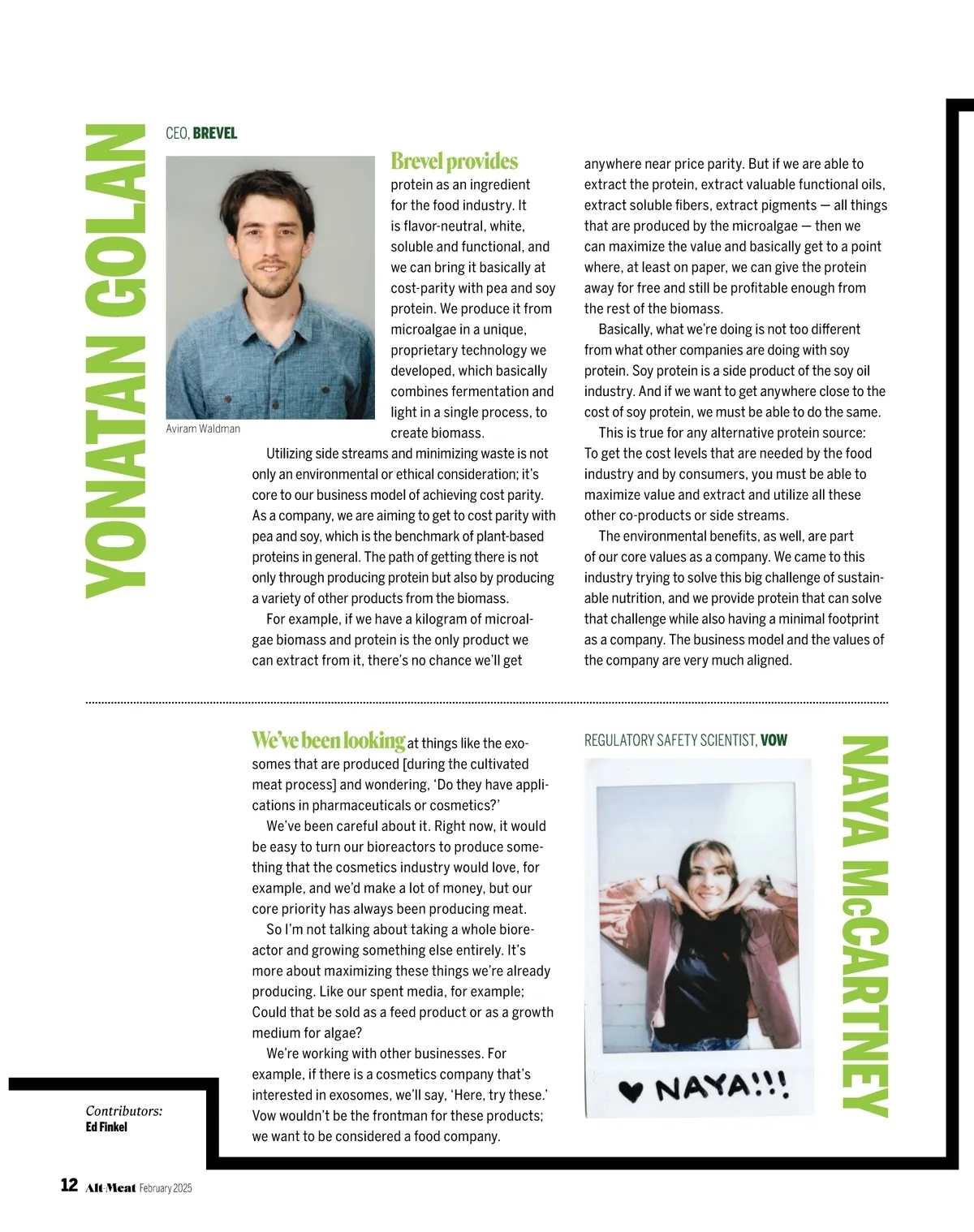
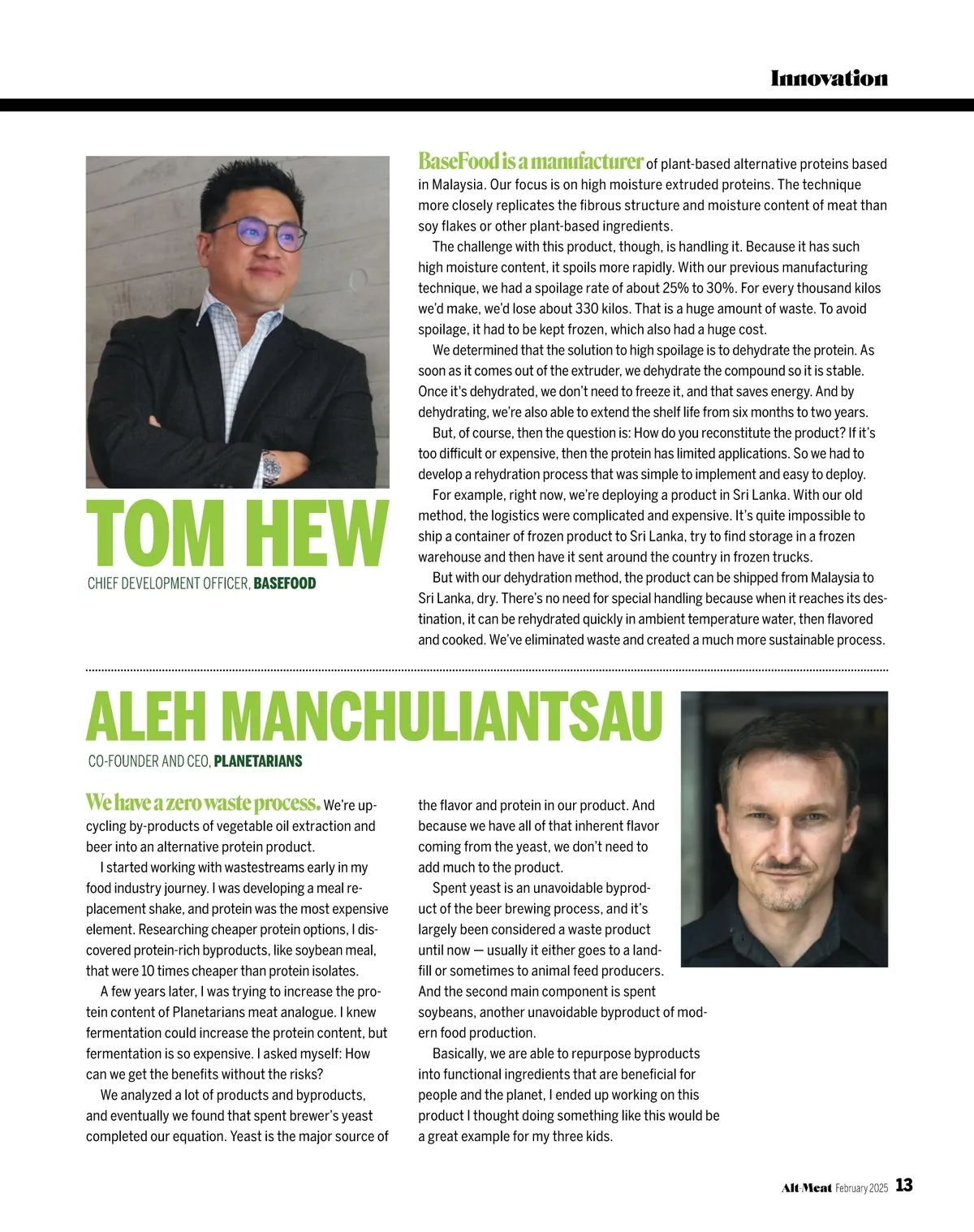
YONATAN GOLAN CEO, BREVEL Aviram Waldman protein as an ingredient for the food industry. It is flavor-neutral, white, soluble and functional, and we can bring it basically at cost-parity with pea and soy protein. We produce it from microalgae in a unique, proprietary technology we developed, which basically combines fermentation and light in a single process, to create biomass. Utilizing side streams and minimizing waste is not only an environmental or ethical consideration; it’s core to our business model of achieving cost parity. As a company, we are aiming to get to cost parity with pea and soy, which is the benchmark of plant-based proteins in general. The path of getting there is not only through producing protein but also by producing a variety of other products from the biomass. For example, if we have a kilogram of microal-gae biomass and protein is the only product we can extract from it, there’s no chance we’ll get Brevel provides anywhere near price parity. But if we are able to extract the protein, extract valuable functional oils, extract soluble fibers, extract pigments — all things that are produced by the microalgae — then we can maximize the value and basically get to a point where, at least on paper, we can give the protein away for free and still be profitable enough from the rest of the biomass. Basically, what we’re doing is not too different from what other companies are doing with soy protein. Soy protein is a side product of the soy oil industry. And if we want to get anywhere close to the cost of soy protein, we must be able to do the same. This is true for any alternative protein source: To get the cost levels that are needed by the food industry and by consumers, you must be able to maximize value and extract and utilize all these other co-products or side streams. The environmental benefits, as well, are part of our core values as a company. We came to this industry trying to solve this big challenge of sustain-able nutrition, and we provide protein that can solve that challenge while also having a minimal footprint as a company. The business model and the values of the company are very much aligned. Contributors: Ed Finkel We’ve been looking at things like the exo-somes that are produced [during the cultivated meat process] and wondering, ‘Do they have appli-cations in pharmaceuticals or cosmetics?’ We’ve been careful about it. Right now, it would be easy to turn our bioreactors to produce some-thing that the cosmetics industry would love, for example, and we’d make a lot of money, but our core priority has always been producing meat. So I’m not talking about taking a whole biore-actor and growing something else entirely. It’s more about maximizing these things we’re already producing. Like our spent media, for example; Could that be sold as a feed product or as a growth medium for algae? We’re working with other businesses. For example, if there is a cosmetics company that’s interested in exosomes, we’ll say, ‘Here, try these.’ Vow wouldn’t be the frontman for these products; we want to be considered a food company. REGULATORY SAFETY SCIENTIST, VOW NAYA M C CARTNEY 12 Alt-Meat February 2025
Alt-Meat February 2025: Page 12