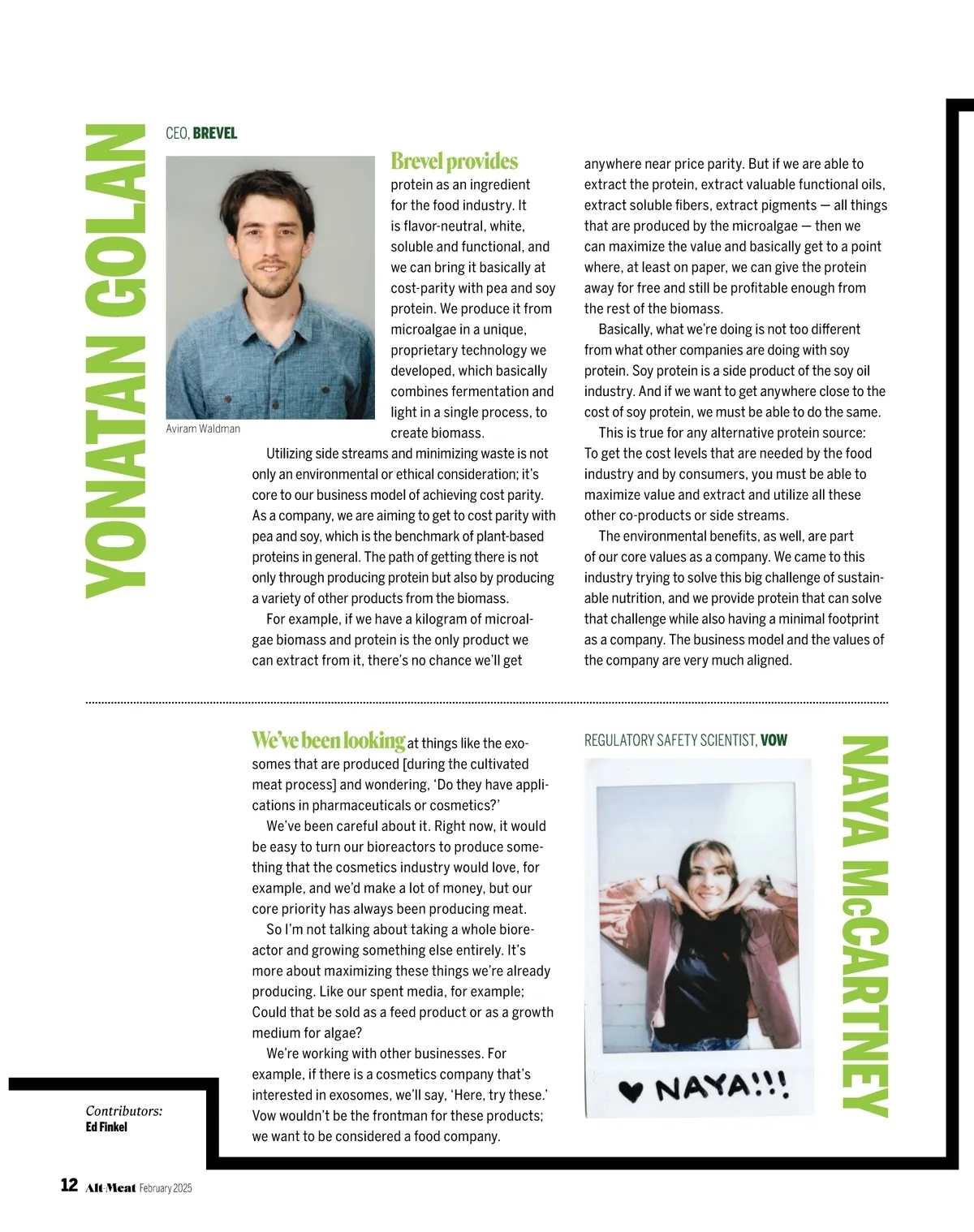
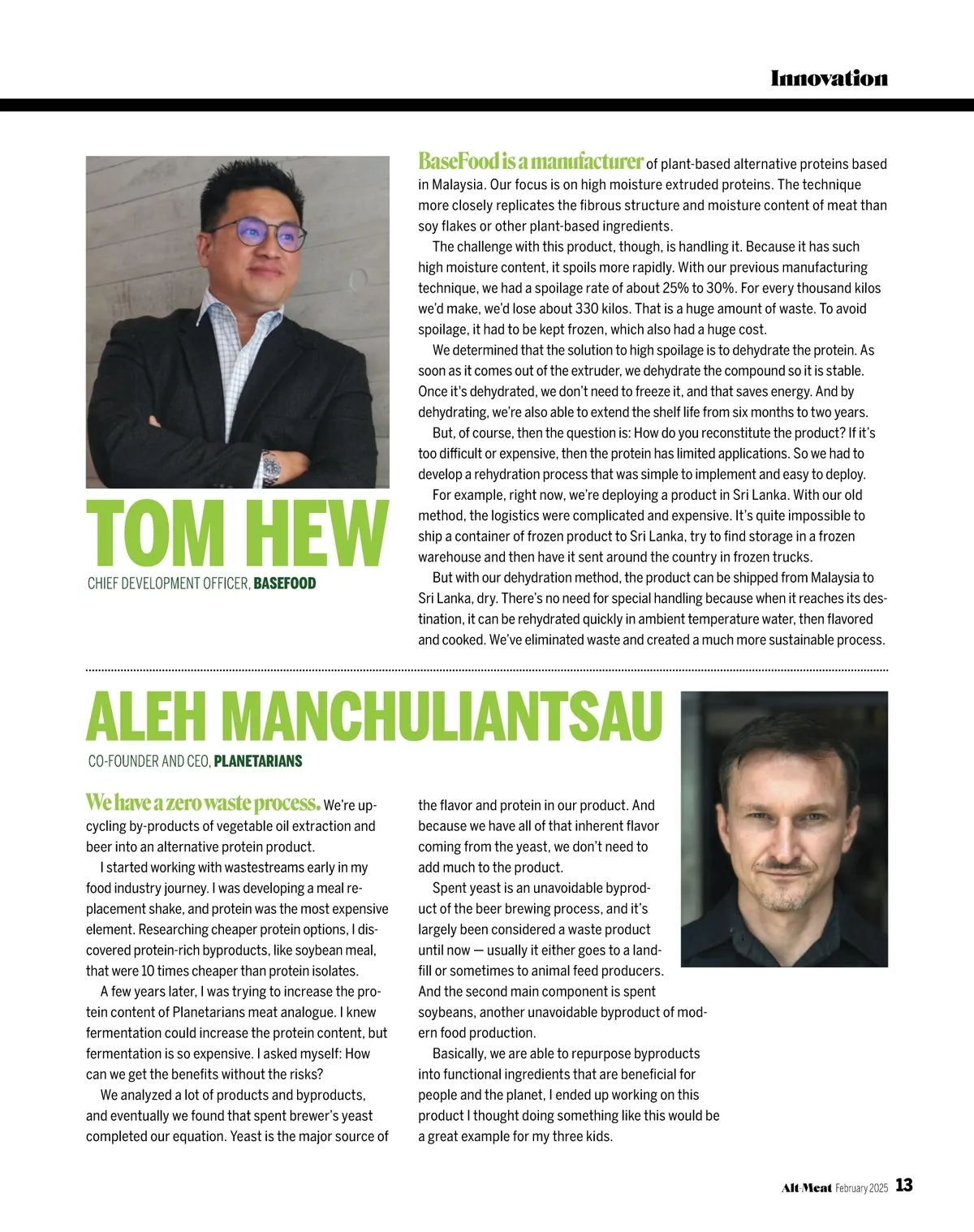
Innovation TOM HEW CHIEF DEVELOPMENT OFFICER, BASEFOOD CO-FOUNDER AND CEO, PLANETARIANS BaseFood is a manufacturer of plant-based alternative proteins based in Malaysia. Our focus is on high moisture extruded proteins. The technique more closely replicates the fibrous structure and moisture content of meat than soy flakes or other plant-based ingredients. The challenge with this product, though, is handling it. Because it has such high moisture content, it spoils more rapidly. With our previous manufacturing technique, we had a spoilage rate of about 25% to 30%. For every thousand kilos we’d make, we’d lose about 330 kilos. That is a huge amount of waste. To avoid spoilage, it had to be kept frozen, which also had a huge cost. We determined that the solution to high spoilage is to dehydrate the protein. As soon as it comes out of the extruder, we dehydrate the compound so it is stable. Once it's dehydrated, we don’t need to freeze it, and that saves energy. And by dehydrating, we’re also able to extend the shelf life from six months to two years. But, of course, then the question is: How do you reconstitute the product? If it’s too difficult or expensive, then the protein has limited applications. So we had to develop a rehydration process that was simple to implement and easy to deploy. For example, right now, we’re deploying a product in Sri Lanka. With our old method, the logistics were complicated and expensive. It’s quite impossible to ship a container of frozen product to Sri Lanka, try to find storage in a frozen warehouse and then have it sent around the country in frozen trucks. But with our dehydration method, the product can be shipped from Malaysia to Sri Lanka, dry. There’s no need for special handling because when it reaches its des-tination, it can be rehydrated quickly in ambient temperature water, then flavored and cooked. We’ve eliminated waste and created a much more sustainable process. ALEH MANCHULIANTSAU We have a zero waste process. We’re up-cycling by-products of vegetable oil extraction and beer into an alternative protein product. I started working with wastestreams early in my food industry journey. I was developing a meal re-placement shake, and protein was the most expensive element. Researching cheaper protein options, I dis-covered protein-rich byproducts, like soybean meal, that were 10 times cheaper than protein isolates. A few years later, I was trying to increase the pro-tein content of Planetarians meat analogue. I knew fermentation could increase the protein content, but fermentation is so expensive. I asked myself: How can we get the benefits without the risks? We analyzed a lot of products and byproducts, and eventually we found that spent brewer’s yeast completed our equation. Yeast is the major source of the flavor and protein in our product. And because we have all of that inherent flavor coming from the yeast, we don’t need to add much to the product. Spent yeast is an unavoidable byprod-uct of the beer brewing process, and it’s largely been considered a waste product until now — usually it either goes to a land-fill or sometimes to animal feed producers. And the second main component is spent soybeans, another unavoidable byproduct of mod-ern food production. Basically, we are able to repurpose byproducts into functional ingredients that are beneficial for people and the planet, I ended up working on this product I thought doing something like this would be a great example for my three kids. Alt-Meat February 2025 13
Alt-Meat February 2025: Page 13