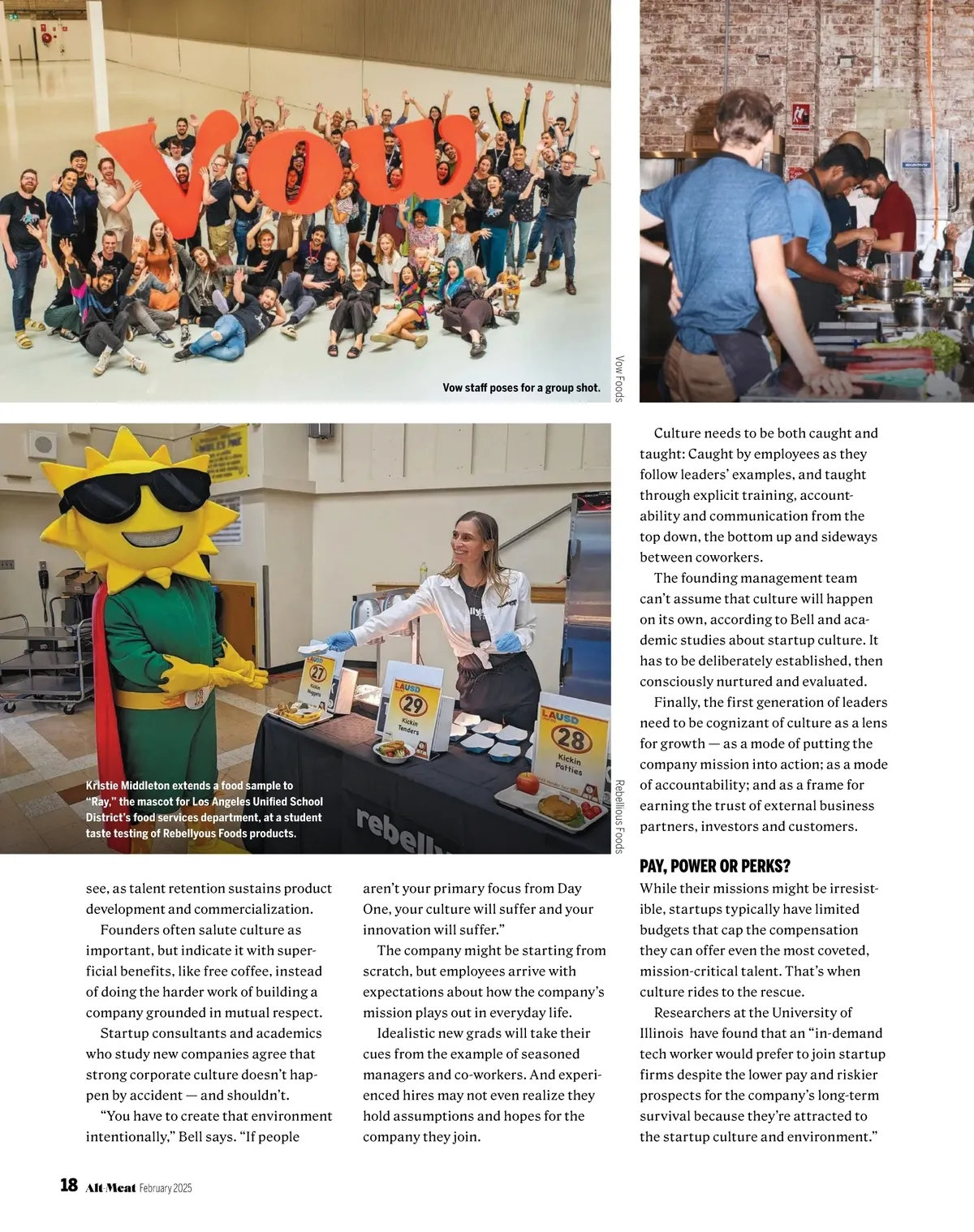
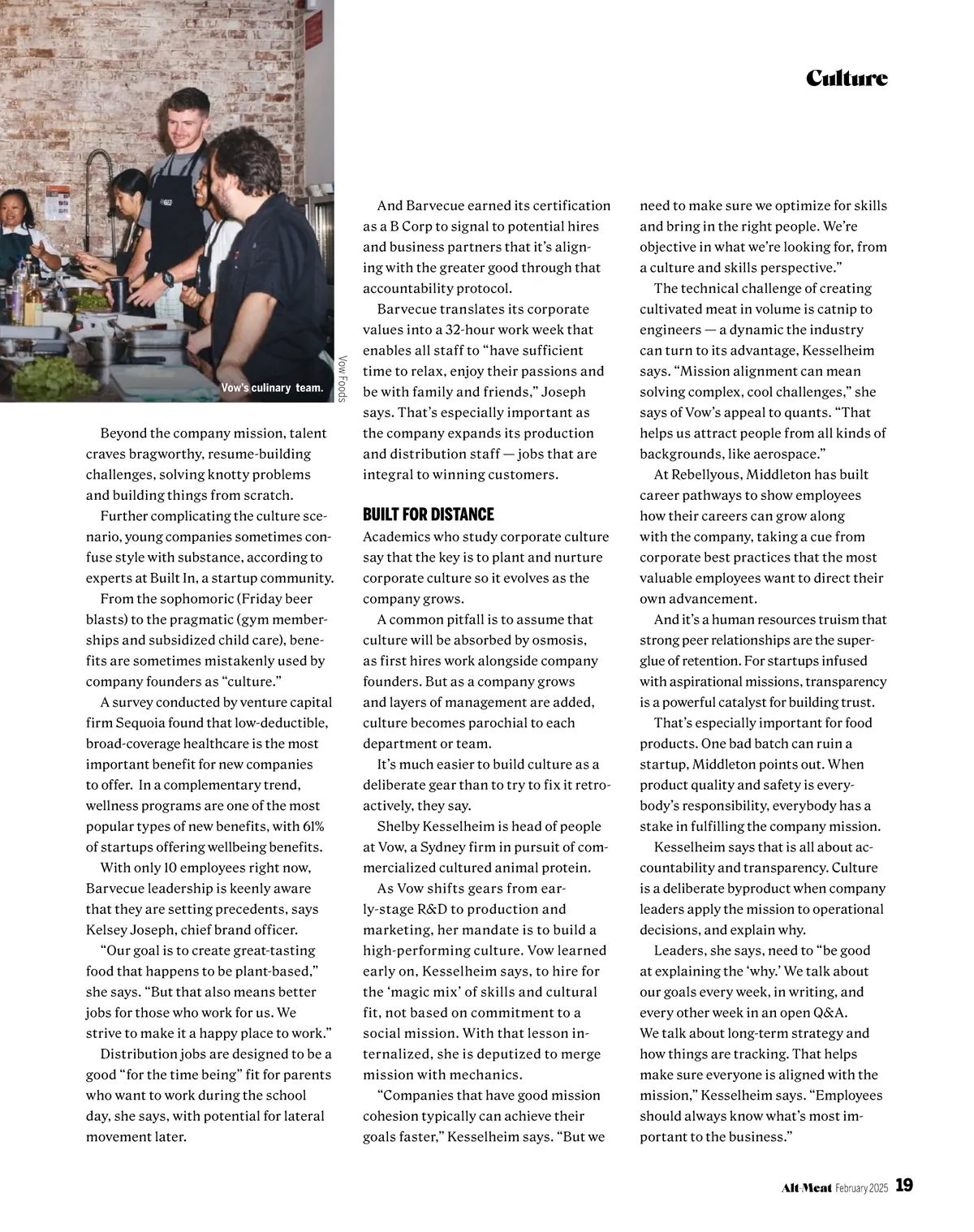
Culture Vow Foods Vow staff poses for a group shot. Culture needs to be both caught and taught: Caught by employees as they follow leaders’ examples, and taught through explicit training, account-ability and communication from the top down, the bottom up and sideways between coworkers. The founding management team can’t assume that culture will happen on its own, according to Bell and aca-demic studies about startup culture. It has to be deliberately established, then consciously nurtured and evaluated. Finally, the first generation of leaders need to be cognizant of culture as a lens for growth — as a mode of putting the company mission into action; as a mode Kristie Middleton extends a food sample to “Ray,” the mascot for Los Angeles Unified School District’s food services department, at a student taste testing of Rebellyous Foods products. of accountability; and as a frame for earning the trust of external business partners, investors and customers. Rebellious Foods PAY, POWER OR PERKS? see, as talent retention sustains product development and commercialization. Founders often salute culture as important, but indicate it with super-ficial benefits, like free coffee, instead of doing the harder work of building a company grounded in mutual respect. Startup consultants and academics who study new companies agree that strong corporate culture doesn’t hap-pen by accident — and shouldn’t. “You have to create that environment intentionally,” Bell says. “If people aren’t your primary focus from Day One, your culture will suffer and your innovation will suffer.” The company might be starting from scratch, but employees arrive with expectations about how the company’s mission plays out in everyday life. Idealistic new grads will take their cues from the example of seasoned managers and co-workers. And experi-enced hires may not even realize they hold assumptions and hopes for the company they join. While their missions might be irresist-ible, startups typically have limited budgets that cap the compensation they can offer even the most coveted, mission-critical talent. That’s when culture rides to the rescue. Researchers at the University of Illinois have found that an “in-demand tech worker would prefer to join startup firms despite the lower pay and riskier prospects for the company’s long-term survival because they’re attracted to the startup culture and environment.” 18 Alt-Meat February 2025
Alt-Meat February 2025: Page 18