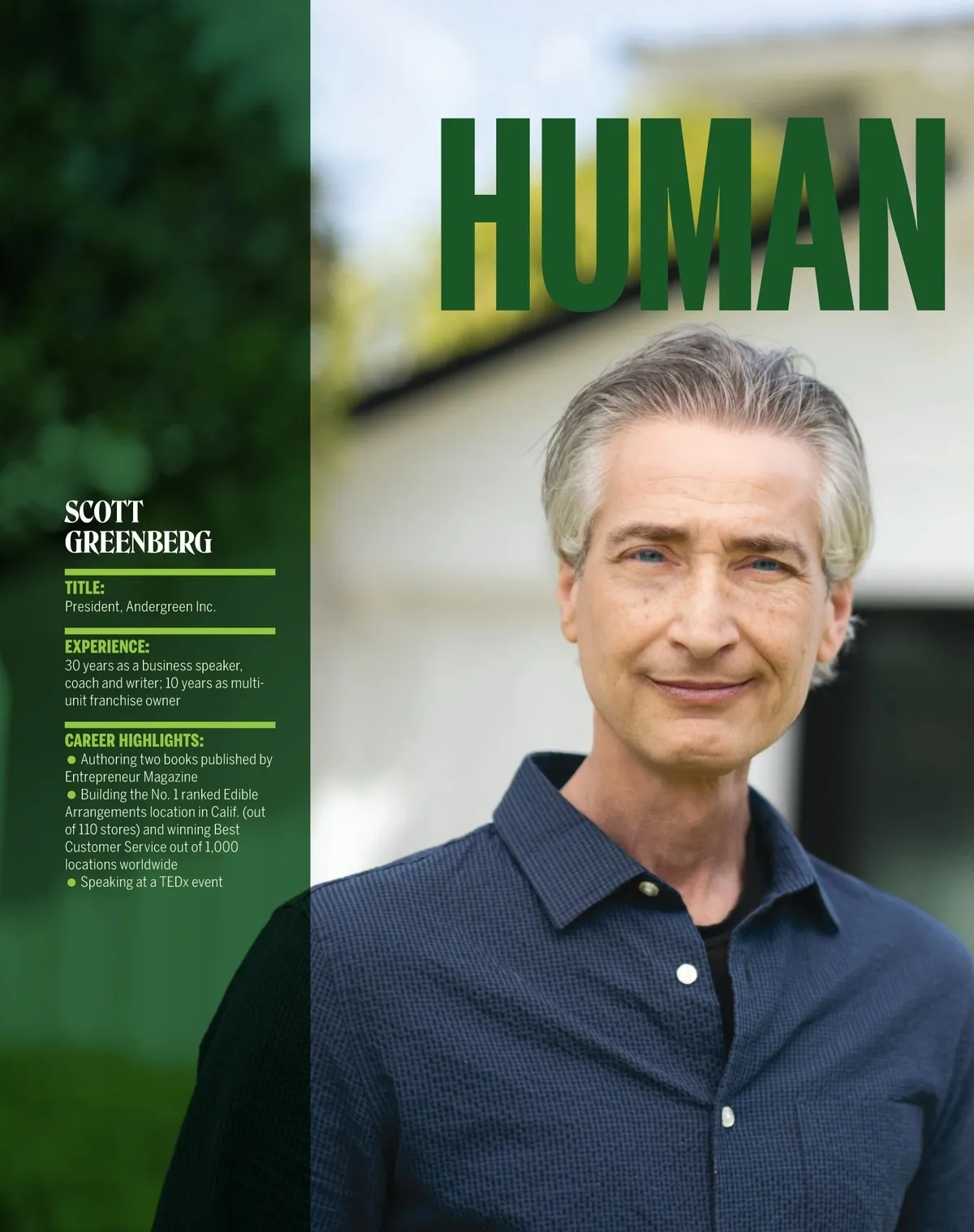
RESOURCES HOW CAN COMPANIES OVERCOME LABOR CHALLENGES AND BUILD A HAPPY WORKFORCE? PER SCOTT GREENBERG, IT’LL REQUIRE INNOVATIVE APPROACHES TO CULTURE, TRAINING AND RETENTION. by Peter Thomas Ricci Photos by Edward Carreon Culture Greenberg, is not a new concept. Worker dissatisfaction, explains Scott “Most people in most jobs have been unhappy, “People want to leave, but they don’t just want to leave — they want to go somewhere better,” Greenberg says. “Now the concept of, ‘You’re loyal just because you’ve been given a job,’ that’s no longer a belief. Everybody has to earn loyalty, and if an employer doesn’t, then employees are going to go seek out another environment.” For insights on how processors can earn their workers’ loyalty, we spoke with Greenberg. at least for decades, perhaps for centuries,” says Greenberg, an entrepreneur and president of the Andergreen consultancy. “But older generations accepted that work is something to be endured. It used to just be: get the bills paid, get a career, try to have some stability.” In recent decades, however, those attitudes have shifted in a profound way. “Endurance,” Greenberg explains, is not the admirable qual-ity it once was. Employees are now looking for an entirely different quality in their work life: happiness. “When so many hourly workers lost their jobs during the pandemic, they had time to reflect, time to realize how difficult their work is,” Greenberg says. “They had time to search their souls and search the internet for new oppor-tunities. We’ve gotten to a point, now, where people are no longer willing to suffer through work. Workplaces that are horrible places to be become less appealing.” Numerous surveys and studies reinforce Greenberg’s point: Gallup’s measurement of employee engagement found 50% of U.S. workers are “not engaged” with their jobs and 16% are “actively disengaged.” Alarmingly, a Legion sur-vey of hourly workers discovered 62% planned to leave their jobs in the next year, with 64% leaving the industry entirely. Alt-Meat: Why are so many workers looking to leave not only their specific job, but entire industries? GREENBERG: So often, it is about a specific workplace; it might be the culture of manage-ment, how people are treated. But in other cases, it is the entire industry, because the work itself is difficult, uncomfortable, unpleasant. And when people have options that are more pleasant, that are more comfortable, and are less painful for the same compensation, it would be crazy for them not to move over to those places. So what that means is, if you can’t make your work environment more physically comfortable or pleasant, then you need to compensate in oth-er ways. The easiest way is to pay more money — that will get people, but it won’t keep people What is going to keep people is if you fulfill other emotional needs by having a great culture, by having better management, by making people feel valued. Where basically, you’re making the discomfort worthwhile, and it’s going to take a lot more than financial compensation to do it. Alt-Meat February 2025 21
Alt-Meat February 2025: Page 21