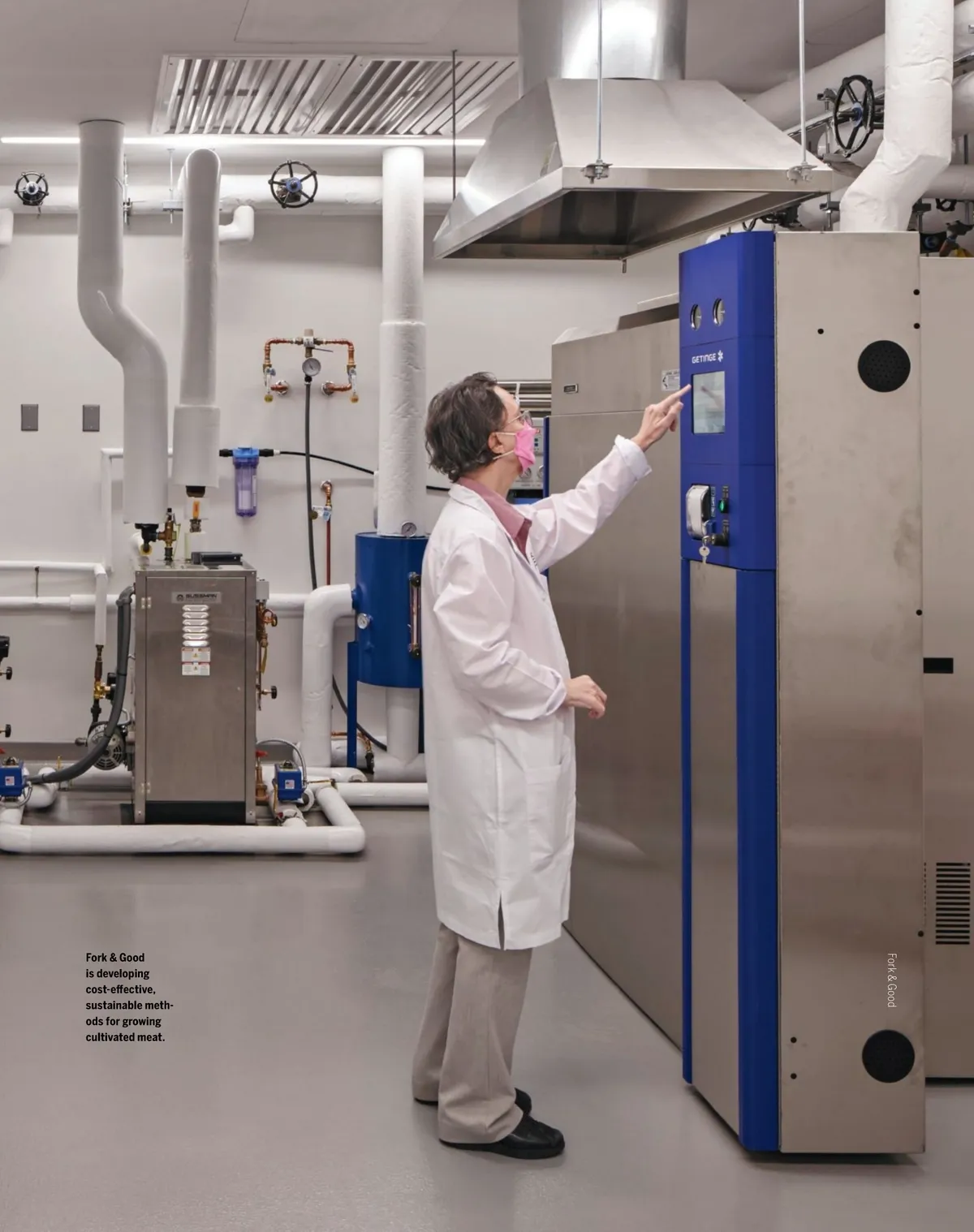
Cultivated Making meat on a by Jennifer Joseph, contributing editor budget WHAT DRIVES UP COSTS The overall production process for cultivated meat is relatively simple. Animal cells are placed in bioreactors within a liquid culture medium that contains all the nutrients necessary for the cells to grow. Once they’ve grown, the cells are harvested and turned into meat products. “There are two main cost drivers in this pro-cess: The cell culture media and the infrastruc-ture,” says Elliot Schwartz, principal scientist, cultivated meat for the Good Food Institute. Infrastructure costs are similar across alt-meat startups — building food-safe, sterile facilities and sourcing equipment. Many cultivated meat companies are working to shift away from expensive pharmaceutical grade bioreactors, instead sourcing steel tanks from food manufacturers or brewers. That can reduce costs substantially, but these costs are largely immutable. Cell culture media costs, on the other hand, are a bit more complex. “The culture medium is a liquid that contains all those components to feed growing cells, in-cluding amino acids, sugars and growth factors,” Forgacs says. “Traditionally, culture medium has included something called fetal bovine se-rum (FBS). It’s a potent source of growth factors, but it’s ethically horrible because it requires slaughtering both a pregnant cow and the fetus. It is also extremely expensive.” Alt-Meat February 2025 THE RACE TO BRING CULTIVATED MEAT PRODUCTS TO MASS MARKET HINGES ON LOWERING PRODUCTION COSTS. RESOURCEFUL SCIENTISTS ARE WORKING ON A VARIETY OF METHODS TO GET THERE. T he cultivated meat industry has come a long way since Dutch scientist Mark Post debuted the first lab-grown burg-er in 2013. That burger cost an eye-popping $350,000 to make. In the decade-plus since, more than 100 startups have taken the starting line in the race to bring cell-cultured meat to market at a much lower price point. And while many have succeeded in developing convincing products, production costs remain a challenging hurdle on the path to commercialization and compet-ing with conventional animal protein. It’s a problem that Gabor Forgacs, co-founder and chief scientific officer of Fork and Good, has faced once before: He founded the company Modern Meadow in 2011 with designs on using bioprinting to produce cultivated meat. “We were able to come up with a yummy culti-vated meat product, but it was very expensive to produce,” Forgacs says. “We were never going to be able to compete with commodity prices.” The startup ultimately shifted its focus to bio-leather, and Forgacs took some time to assess the challenges before jumping into the cultivated meat space again. “I definitely learned some lessons, and it was painful for me to watch other companies going through the same mistakes,” he explains. “So with Fork and Good, we had some definitive ideas on how to bring down the cost.” 27
Alt-Meat February 2025: Page 27