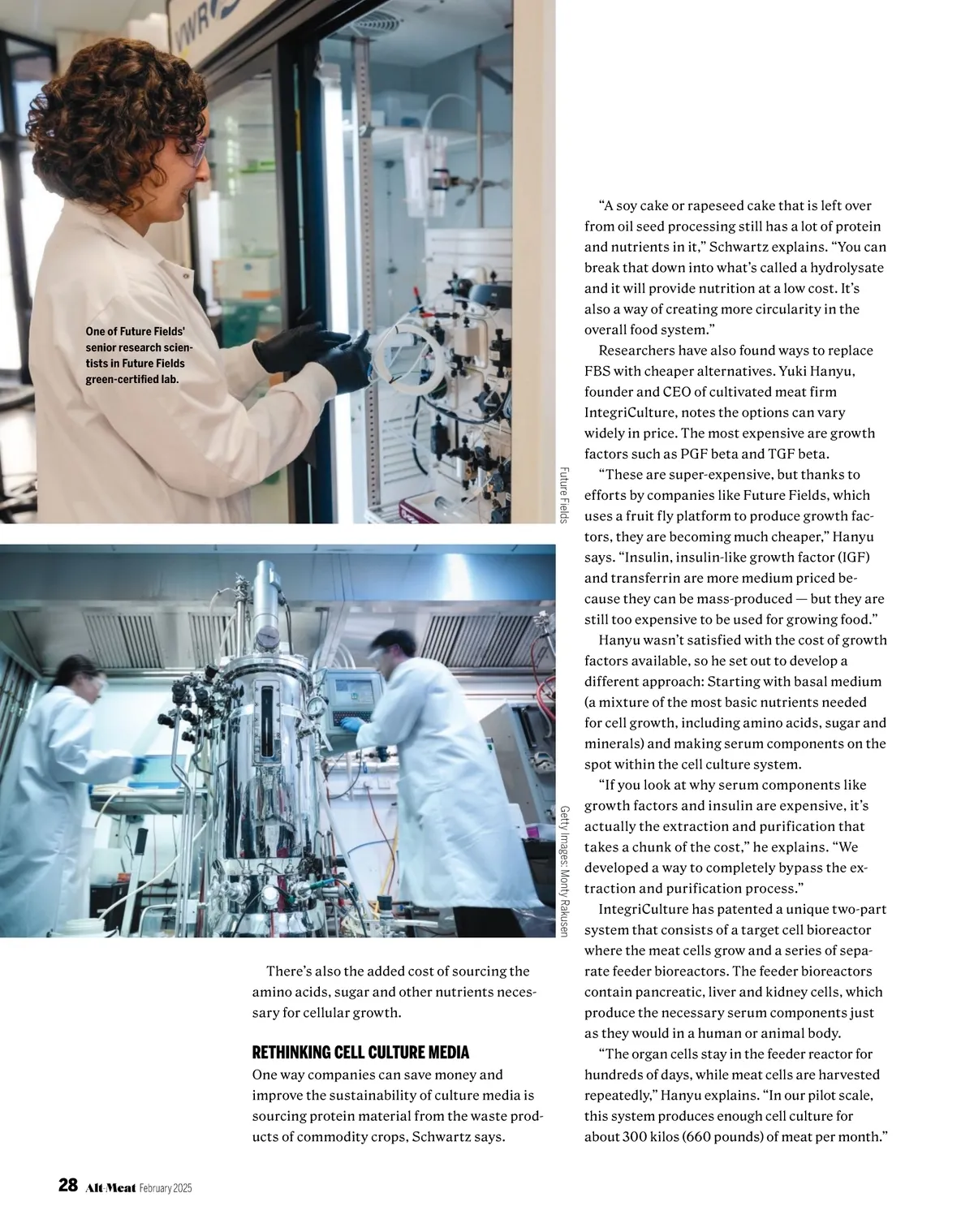
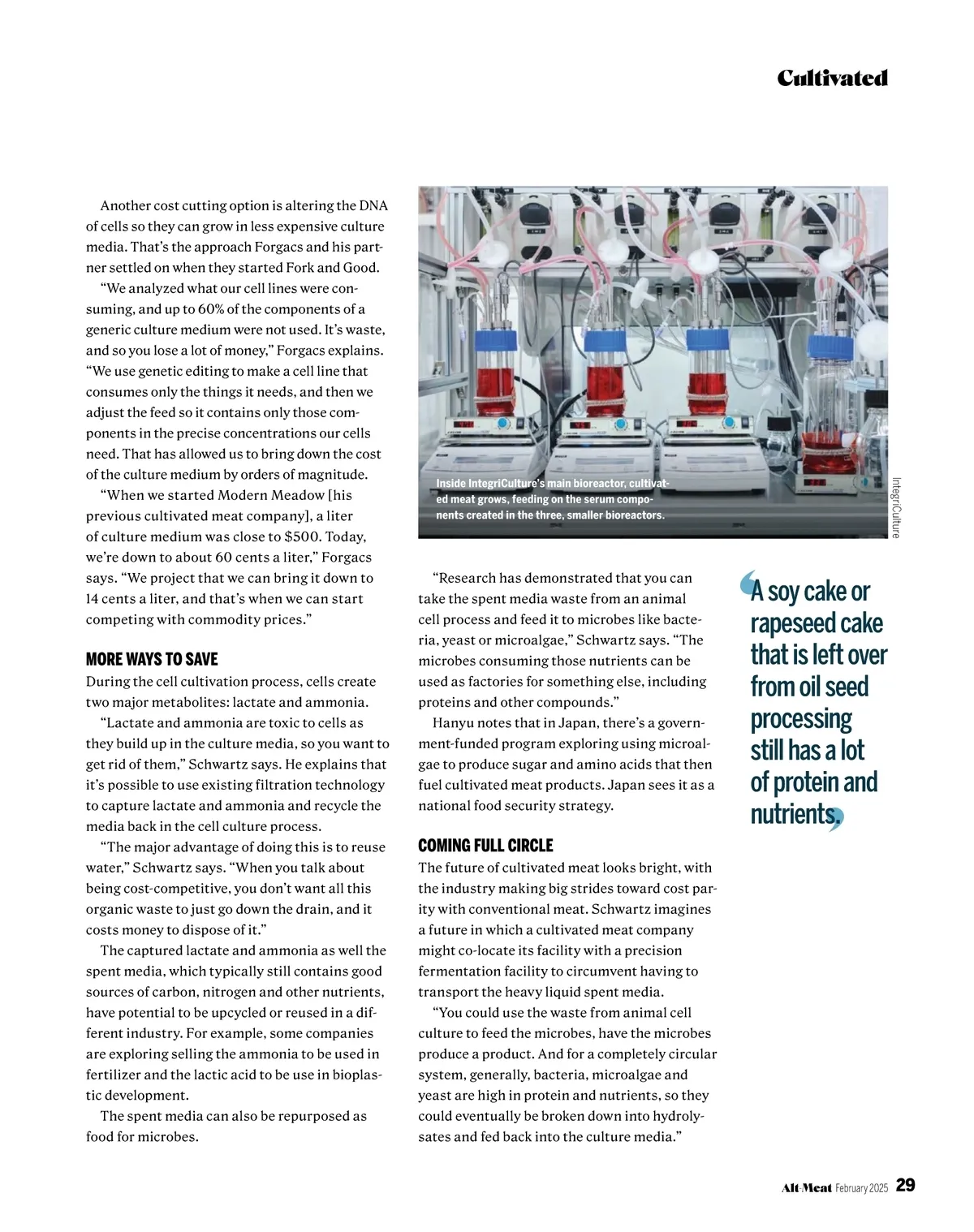
Cultivated “A soy cake or rapeseed cake that is left over from oil seed processing still has a lot of protein and nutrients in it,” Schwartz explains. “You can break that down into what’s called a hydrolysate and it will provide nutrition at a low cost. It’s also a way of creating more circularity in the One of Future Fields' senior research scien-tists in Future Fields green-certified lab. overall food system.” Researchers have also found ways to replace FBS with cheaper alternatives. Yuki Hanyu, founder and CEO of cultivated meat firm IntegriCulture, notes the options can vary widely in price. The most expensive are growth factors such as PGF beta and TGF beta. “These are super-expensive, but thanks to efforts by companies like Future Fields, which uses a fruit fly platform to produce growth fac-tors, they are becoming much cheaper,” Hanyu says. “Insulin, insulin-like growth factor (IGF) and transferrin are more medium priced be-cause they can be mass-produced — but they are still too expensive to be used for growing food.” Hanyu wasn’t satisfied with the cost of growth factors available, so he set out to develop a different approach: Starting with basal medium (a mixture of the most basic nutrients needed for cell growth, including amino acids, sugar and minerals) and making serum components on the spot within the cell culture system. “If you look at why serum components like growth factors and insulin are expensive, it’s actually the extraction and purification that takes a chunk of the cost,” he explains. “We developed a way to completely bypass the ex-traction and purification process.” IntegriCulture has patented a unique two-part system that consists of a target cell bioreactor where the meat cells grow and a series of sepa-There’s also the added cost of sourcing the amino acids, sugar and other nutrients neces-sary for cellular growth. rate feeder bioreactors. The feeder bioreactors contain pancreatic, liver and kidney cells, which produce the necessary serum components just as they would in a human or animal body. “The organ cells stay in the feeder reactor for hundreds of days, while meat cells are harvested repeatedly,” Hanyu explains. “In our pilot scale, this system produces enough cell culture for about 300 kilos (660 pounds) of meat per month.” Getty Images: Monty Rakusen Future Fields RETHINKING CELL CULTURE MEDIA One way companies can save money and improve the sustainability of culture media is sourcing protein material from the waste prod-ucts of commodity crops, Schwartz says. 28 Alt-Meat February 2025
Alt-Meat February 2025: Page 28