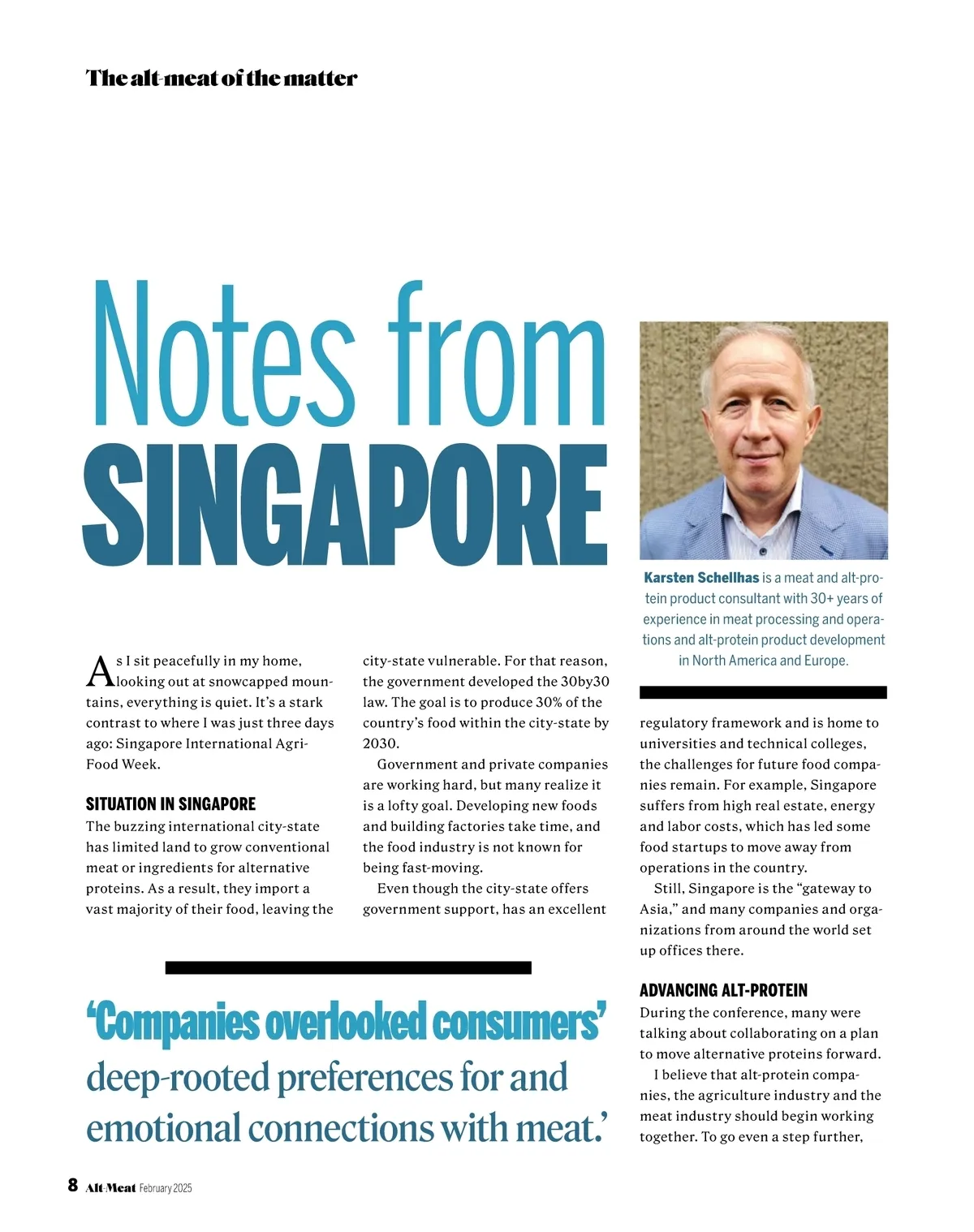
The alt-meat of the matter SINGAPORE A s I sit peacefully in my home, looking out at snowcapped moun-city-state vulnerable. For that reason, tains, everything is quiet. It’s a stark contrast to where I was just three days ago: Singapore International Agri-Food Week. law. The goal is to produce 30% of the 2030. Notes from Karsten Schellhas is a meat and alt-pro-tein product consultant with 30+ years of experience in meat processing and opera-tions and alt-protein product development in North America and Europe. the government developed the 30by30 country’s food within the city-state by Government and private companies are working hard, but many realize it is a lofty goal. Developing new foods and building factories take time, and the food industry is not known for being fast-moving. Even though the city-state offers government support, has an excellent regulatory framework and is home to universities and technical colleges, the challenges for future food compa-nies remain. For example, Singapore suffers from high real estate, energy and labor costs, which has led some food startups to move away from operations in the country. Still, Singapore is the “gateway to Asia,” and many companies and orga-nizations from around the world set up offices there. SITUATION IN SINGAPORE The buzzing international city-state has limited land to grow conventional meat or ingredients for alternative proteins. As a result, they import a vast majority of their food, leaving the ‘Companies overlooked consumers’ 8 Alt-Meat February 2025 ADVANCING ALT-PROTEIN During the conference, many were talking about collaborating on a plan to move alternative proteins forward. I believe that alt-protein compa-nies, the agriculture industry and the meat industry should begin working together. To go even a step further, deep-rooted preferences for and emotional connections with meat.’
Alt-Meat February 2025: Page 8